I have several well-meaning relatives, especially female, who, whenever they meet me after a long interval, never miss a chance to comment on whether I’ve gained or lost ‘weight’. After having used the ‘lost’ version too many times consecutively, they finally decided to ask me what they should do to get slimmer.
Many of these relatives are middle-aged, between 40 and 60 years old (DISCLAIMER – I don’t subscribe to this dictionary-definition of middle age, which suggests that one becomes ‘old’ at age 60.) The moment I mention to them that apart from adopting an appropriate diet protocol, they should incorporate resistance training into their exercise regimen, they are visibly flummoxed. Isn’t weight training for young persons and bodybuilders, that too, males? Why don’t you tell us how many kilometres to walk or how often to do Yoga?
It is a far too common misconception that
resistance training, particularly the kind done in a gym, is not meant for
people above a certain age. I would argue, in fact, that it is the one form of
exercise that older persons MUST incorporate into their exercise
programme.
One of the surest signs of body aging is
the loss of muscle mass. Due to changes in the nature of physical activity, diet,
metabolism and hormonal profile (especially for women), one starts to lose
muscularity in the absence of a concerted effort to maintain lean mass.
Engaging in regular strength training can
help avoid muscular atrophy, or loss of muscle. This, in turn, helps to:
avoid loss of strength, which
allows one to do simple day-to-day functions, as well as the difficult or occasional
ones, easily and effortlessly
protect the joints from injury,
especially weight-bearing ones, which are essential for independent hassle-free
locomotion
enable quick recovery in the
case of any injury
retain good posture, which is
especially useful for keeping the spine healthy
maintain a strong core, which
helps keep up stamina
maintain a toned look, which
keeps one looking younger than one’s chronological age
Additionally, strength training encourages and sustains fat loss, which is usually considered impossible in the middle age. Music for your ears?
The only caveat would be to test for any chronic medical conditions such as hypertension, diabetes, post-surgery issues, or orthopaedic issues and get a professional practitioner’s clearance before embarking on a resistance-training programme. Also, as for any other age group, one should begin a strength-training programme under the supervision of a qualified instructor.
Here’s some more motivation to try out a gym for the first time – At your next birthday party, expect people to tell you that you look younger this year than at your previous birthday!
In June 2017, after having suffered one of the worst phases, health-wise, in my life, I started the #21Weeks21Habits #HealthyLiving journey on Facebook as a way to get a semblance of health back into my lifestyle. They say that announcing to the world that you are taking up a challenge improves adherence – I thought Facebook would be the best medium to make such an announcement.
Those 21 weeks changed several things for me for the better and reignited my passion for health and fitness in a way I had not imagined. Egged on by a dear friend, I launched another challenge on Facebook in August 2018, with the small difference that I opened it up to my friends and their friends.
I called it the #84DaysToDiwaliChallenge #HealthierVersionOfMe. Why 84 days? Because it is 12 weeks, just enough time to feel, see and show significant improvement in lifestyle and health. Also, it is the reverse of ’21’, but easier to stick with. Why Diwali 2018? Because it provided a neat marker that led us to the holiday season that one would, hopefully, be well prepared to handle and enjoy. The Challenge ran on a weekly basis – I posted a challenge each week, adding a new challenge each week. All participants tracked their own adherence and progress on each challenge cumulatively, twelve challenges in all. I announced the movements on the leader board each week.
This post is about the journey of the Winner of the Challenge, Shraddha Sinkar, through the 84 days, (almost) in her own words. But before I get to that, some quick statistics:
Number of people who signed up to the Challenge: 21
Number of people who did not begin the Challenge: 6
Number of people who dropped out by Week 6: 5
Number of people who completed the 12-week Challenge: 7
The toughest Challenges for the group: ‘Drinking enough water’ and ‘getting out in the sun’
The easiest Challenges for the group: ‘Rewarding themselves’ and ‘taking their vitamins’
For many of those who completed the Challenge, it was a reminder of how easily one can adopt a healthy lifestyle. For others, it was a turnaround of sorts to discover what they were capable of accomplishing. For everybody, though, it was exciting to be doing this together with a bunch of strangers and feeding off their enthusiasm and successes.
Now for the interview (from mid-November 2018)…
Maithilee (MSJ): Could you please introduce yourself to my readers?
Shraddha (SS): I am a software engineer, ex-Deloitte, now running my own agency. Being self-employed gives me a lot more flexibility in my day-to-day schedule, which works well for our family of three, including my 9-year old son.
MSJ: What made you sign up to the #84DaysToDiwaliChallenge?
SS: I had already been thinking about doing something specific and effective for my health for some time. I felt that there was a lack of schedule in my lifestyle and I needed some reinforcement to bring it back to order. The Challenge was the perfect opportunity to do that.
MSJ: Which weekly challenge(s) was/ were new or unexpected for you?
SS: The ‘getting out in the sun’ challenge was the most curious for me. But a few others, such as ‘sleeping 6-8 hours a night’, ‘rewarding yourself’, and ‘catching up with friends/ family’ were also intriguing – things that I had not given enough thought to.
MSJ: Which weekly challenge was the hardest for you to keep up?
SS: The ‘sun’ challenge! (Laughs)
MSJ: Which one was the easiest to follow?
SS: ‘Avoiding data on all devices an hour before bedtime’. I had often thought of implementing a rule like this. Participating in this Challenge made it happen. Now, even my husband tries to keep up with it. (Smiles)
MSJ: Talking of your husband supporting and accompanying you on this, how has your family been involved in this Challenge?
SS: Apart from the ‘no data’ challenge, they are automatically involved in the ‘planned meals’ programme since I prepare the meal plan for the entire family, so that they get all their macronutrients, especially protein. In addition, ‘drinking enough water’ is something they have also taken to heart, especially my son!
MSJ: You were on the leader board consistently through these twelve weeks and finally won this Challenge. Are there any aspects that you believe you still need to do better on?
SS: Yes, on ‘getting enough sun exposure’, ‘exercise’ and ‘drinking enough water’. There is room for improvement…
MSJ: Have you felt any palpable changes in yourself since beginning this Challenge 12 weeks ago?
SS: Yes, absolutely. Firstly, there was that ‘feel-good’ sense of doing something good for my health. Secondly, I needed lifestyle changes to help support the thyroid problem that I have had – I believe I have those things in place now. Finally, I lost about 9 inches overall in these 12 weeks!
Thank you, Shraddha, for taking the time to share your story with my readers and me. Wish you greater success on your health journey!
P.S.The interview above is an abridged version of the conversation with Shraddha, since we spoke in both, English and our vernacular language.
1. Sometimes baby steps are all you need to overcome your biggest tasks.
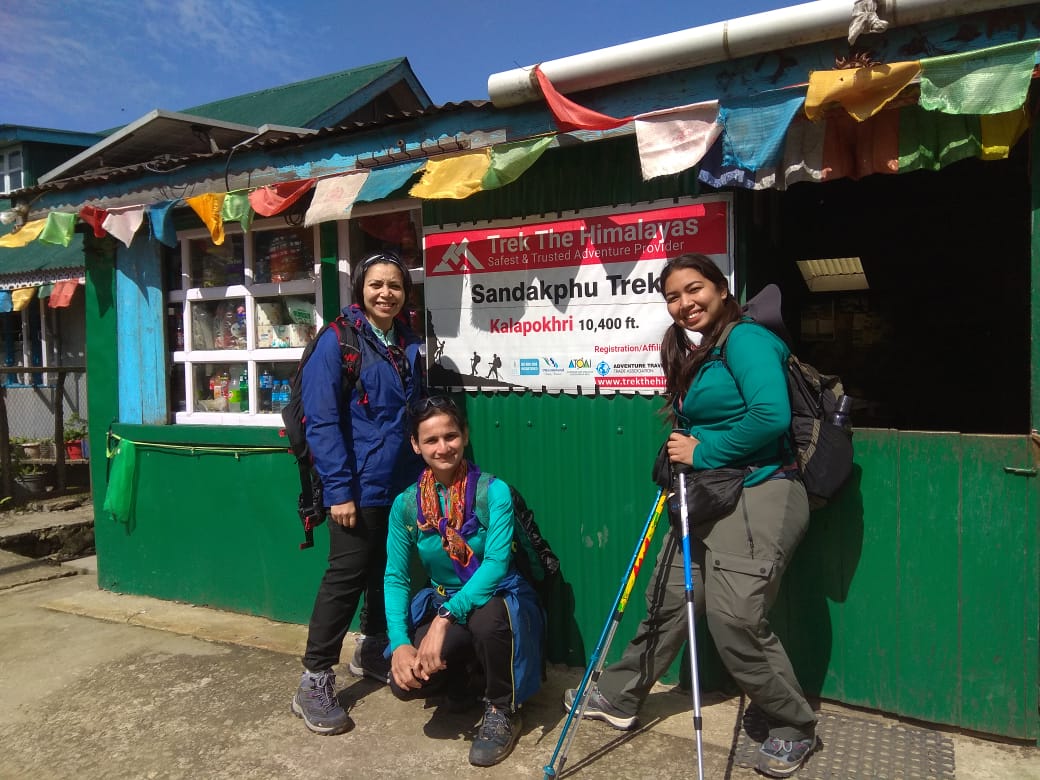
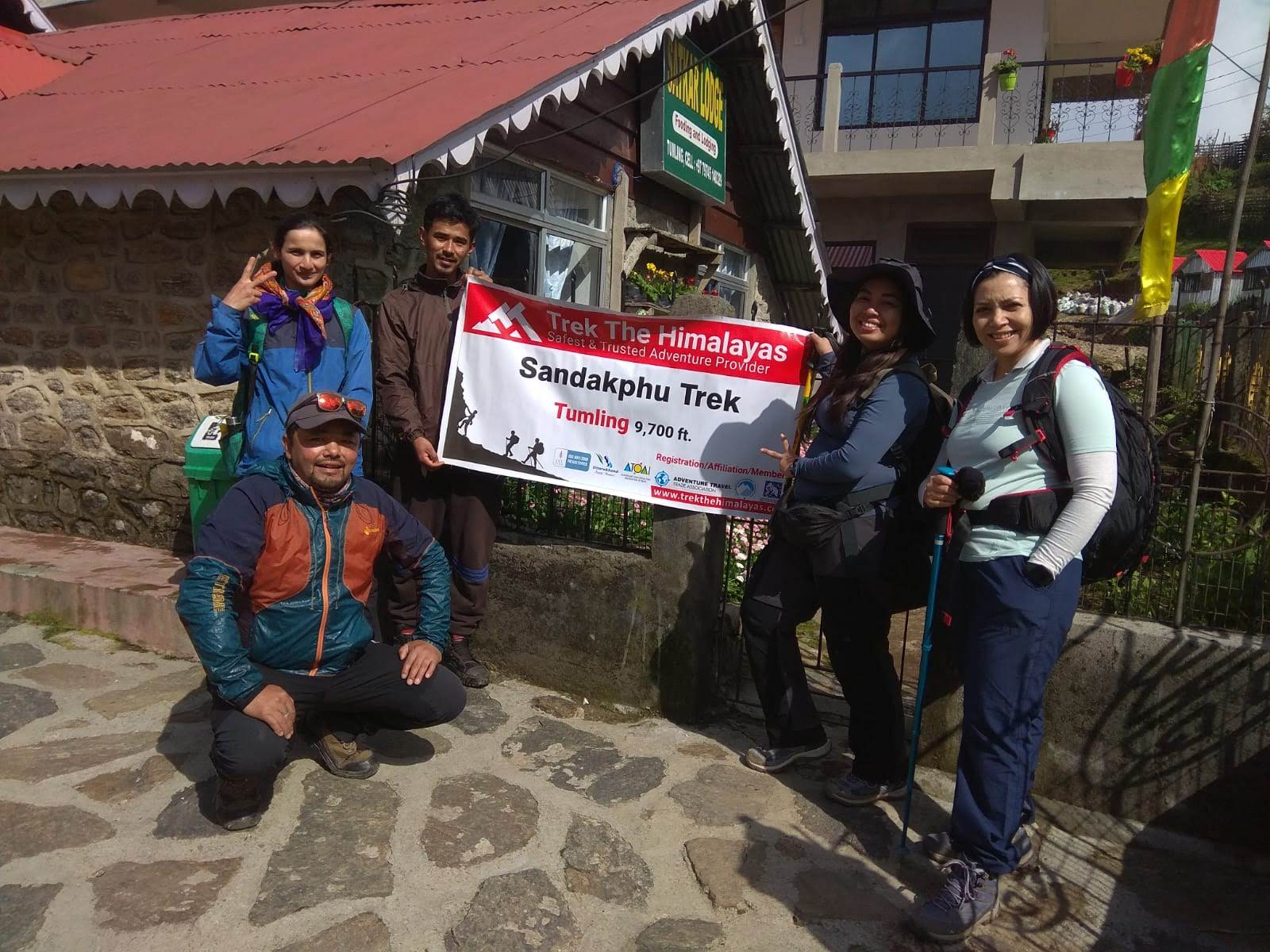
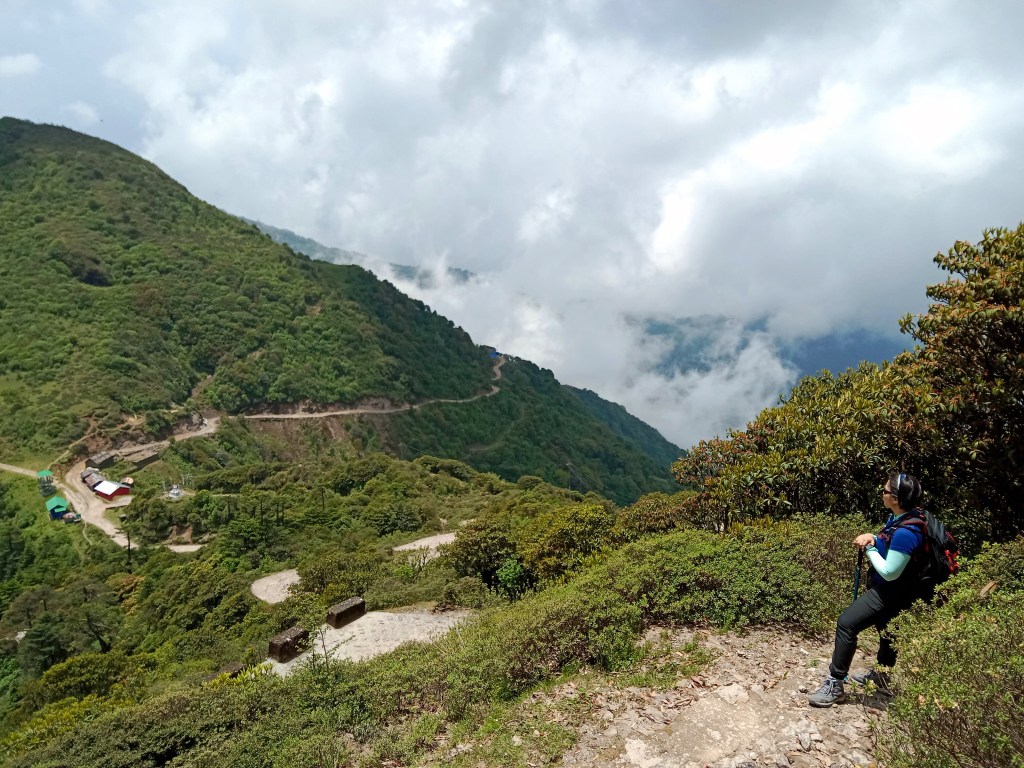
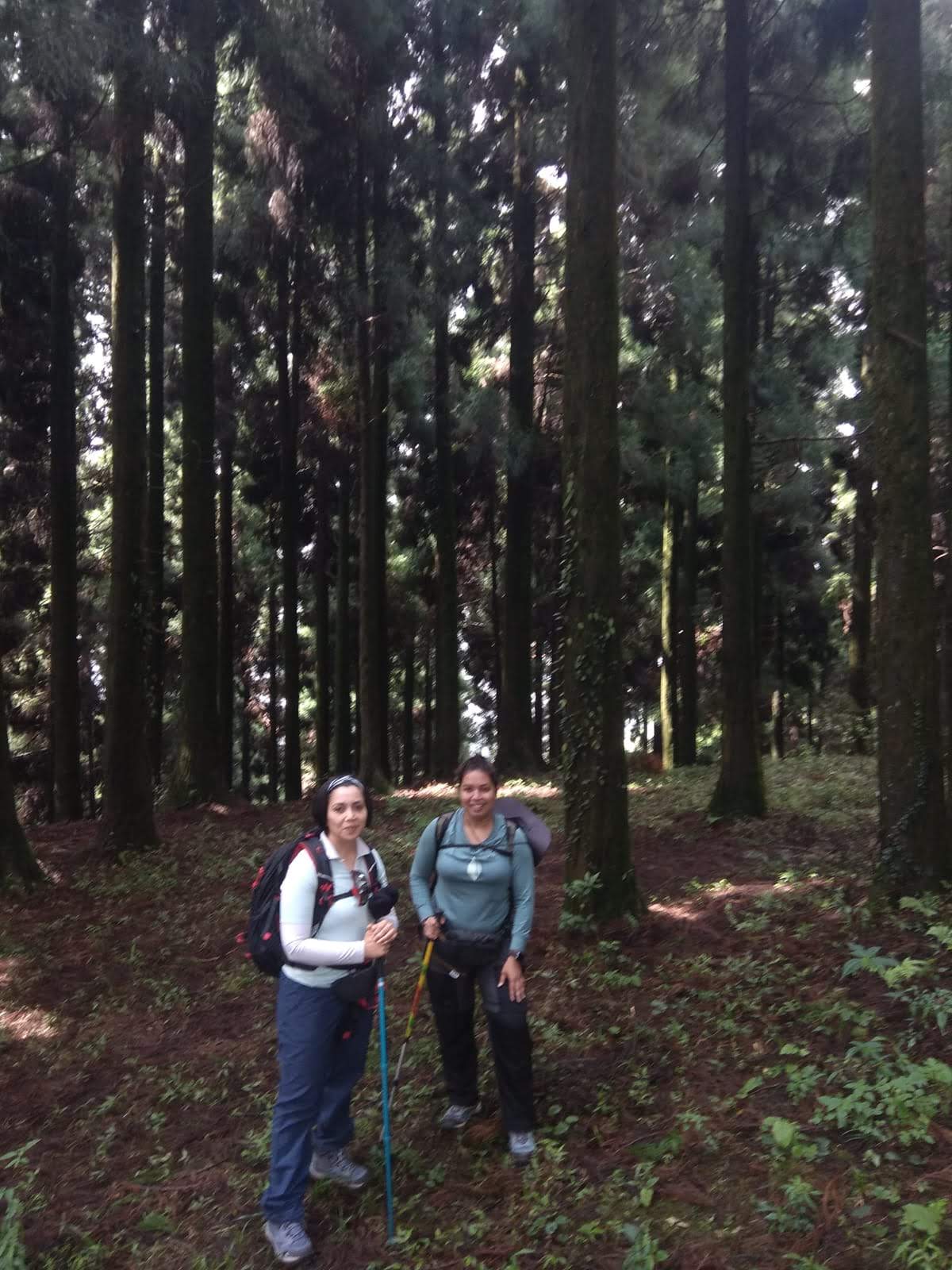
It was Day 3 of the trek – one of those long-distance days – when we were going to cover 14 kms, including a 700 ft overall ascent. The interesting part – we first descended about 900 ft over a long 7-km downhill walk from Tumling, via Lameydhura to Gairibas, via a beautiful trail in the Singalila National Park. So, in effect, the second half of the trek, via Kaykatta to Kalapokhri, was all an uphill climb of 1,600 ft.
After the first couple of kms of uphill treading, I was beginning to find it, well, an uphill task. My trek-mates were still visible somewhere in the distance ahead, but I did not seem to have an inclination or the strength to catch up with them. To make matters worse, it started raining… hard… hailstones hard! So, you are climbing up an average incline of 25 degrees, in the cold weather, wet to the bone because the rain has entered even your shoes and socks making it heavier to move, and you have hailstones pouring down on you!
In an alternative universe, I would have sat down there and waited for some kind soul to drive me to the destination. That’s not always an option in the Himalayas… sigh. So I told myself – just walk 12 more steps without stopping (I don’t know why I picked that number… maybe because of my yogic training…) I found that I could do that with relative ease, so I said, let’s try 24 steps without stopping. And I found that I could mostly do that too. I’d walk 24 steps, sometimes 36 or 48, and then take a moment to catch my breath. And, I made it through the rest of the 5 kms uphill, through the hail and wind, 24 steps at a time.
When I finally reached the tea house at Kalapokhri (Indo-Nepal border), my heart was palpitating as if unsure of whether to stop or to go on. For a few moments I could not move beyond the doorway. I had walked the bulk of the distance, a few baby steps at a time. Sometimes, just that much is all you need to go on.
2. No goal is larger than your willpower.
Day 4 of the trek was *supposed* to be the shortest of all – just 6 kms of trekking. But, obviously, there was a catch, no, there were two! One, the 6 kms were all uphill, at a higher incline than what we had seen so far, about 35-40 degrees, and, two, there were an additional couple of kms after the so-called 0 km point to our actual destination! Plus, of course, we were ascending about 1,550 ft to take us to the highest point of our trek, Sandakphu, from where the view of The Sleeping Buddha was promised.
I started the day feeling upbeat despite the fact that I hadn’t slept soundly the previous three nights because of the cold. Also, how far could 6, or even 8 kms, really be?! Alas, half a kilometre into the trek and I was beginning to lose steam. One of my trek-mates fell behind with me to egg me on. She could see I needed the motivation.
This last stretch was all along the motorable, albeit broken, road that goes up to Sandakphu, so there were several 4X4s that passed us by. With each passing vehicle, I felt my resolve not to ask for a lift diminish little by little. At one point, about halfway through, even our trek guide suggested I take a lift.
But, how exciting is a destination if you haven’t had to undertake the journey to get there? I wondered if I’d enjoy the view as much if I didn’t get there on my own two feet. I squeezed every ounce of willpower within me to carry on, 24 baby steps at a time.
We were supposed to have reached the top by lunchtime, around 1 pm. I got there just a little after 2 pm, my trek-mate by my side. But the sense of achievement was palpable. I had summited my mountain!
3. Hospitality is a factor of the space in your heart, not of the space in your house.
Living in the hills is all about optimising energy, in every way possible. No resource is to be wasted. Luxury is not a thing in the hills. One of the most visible ways this manifests is in the size of the dwellings of the mountain people. With each location that we put up at, the tea-houses got smaller, the rooms cosier.
This might sound Newtonian, but as the size of the rooms got tinier, the hospitality got warmer! At all our rest stops on Day 1 and 2 – Kopidara, Chitrey, Meghma, Tumling – there was a quiet cordiality to interactions with our hosts. By the time we were at Sandakphu and Shepi, Days 5 and 6, the quality of the conversation was decidedly welcoming and warm.
4. Simplicity is beautiful.
The best things in life are really quite simple. Even though it was May, temperatures in the middle eastern Himalayas, along West Bengal and Sikkim, range between 5 degrees C to 18 degrees C, give or take a few depending on rain and wind. Hot water, especially for a bath, is a luxury, finger-numbing freezing water being the norm. In such conditions, being served steaming hot homemade food for each meal was like having Annapurna herself descending to feed us.
At the tea-house rest stops, we had practically the same lunch and dinner (sometimes breakfast too) on five consecutive days – wheat flatbread (rotis), local rice, potato curry, and yellow lentils (daal), served with paapad and chilli pickle. Sometimes, we’d have a boiled egg too. But we relished every morsel! Guess the warmth and caring with which it was served had a lot to do with it. Our trek guides would almost physically manoeuvre us away from our photographing and selfie-taking narcissistic selves to get us to eat the food while it was still hot.
5. The key to good health is consistency, period
Talking about being served the same food, I learnt that our trek guides, locals from the region, had even simpler fare on a daily basis. But the ingredients usually came from their own or a neighbour’s vegetable patch, the staples were indigenous, and all the fresh produce, including the wine (rhododendron/ rice/ berries), was organic.
These people are fit, to say the least, and hardworking. They wake up with the sun, around 4 am (eastern sunrises have a charm of their own!) and go to bed shortly after sundown. They do this every day, changing course only as per the season. Is it any wonder that they don’t seem to age or slow down?!
6. Practice, indeed, makes perfect.
Day 4, which I mentioned above, was undoubtedly the toughest of all. Our trek guides had budgeted 3.5 hours for us to get through the 8 km – 1,550 ft climb. We overshot that. But guess how long each of them usually takes to undertake that stretch… a mere 45 mins, that too without a trekking pole! The 10,000-hour rule applies here like nowhere else! The more you do something, the better you get at it. What seemed incredibly hard for us is the way of life for these folks. The ease with which they traverse the mountains is a result of practice, which began when they were but little children.
7. Common experiences, especially the tough ones, make for strong human connections.
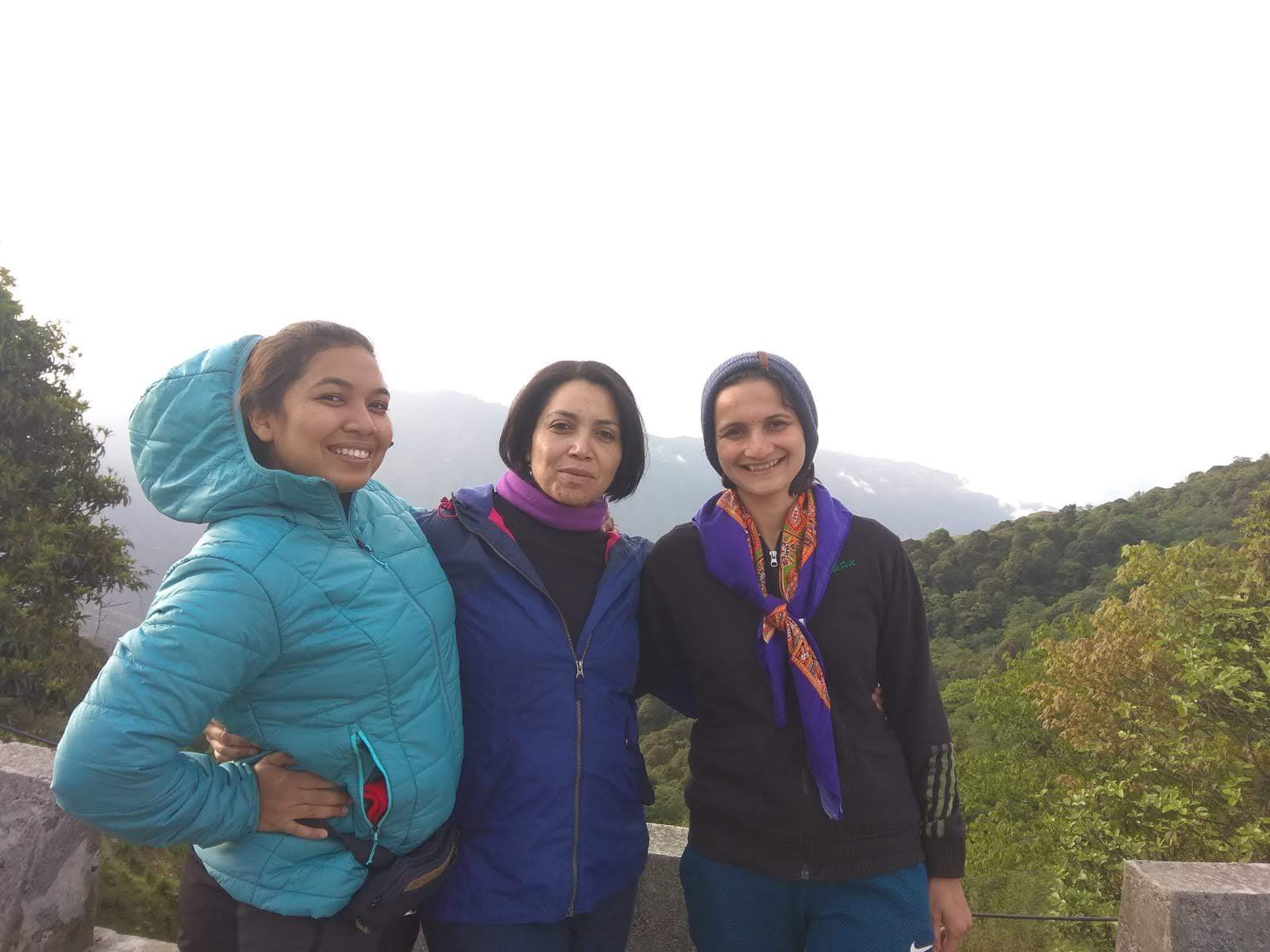
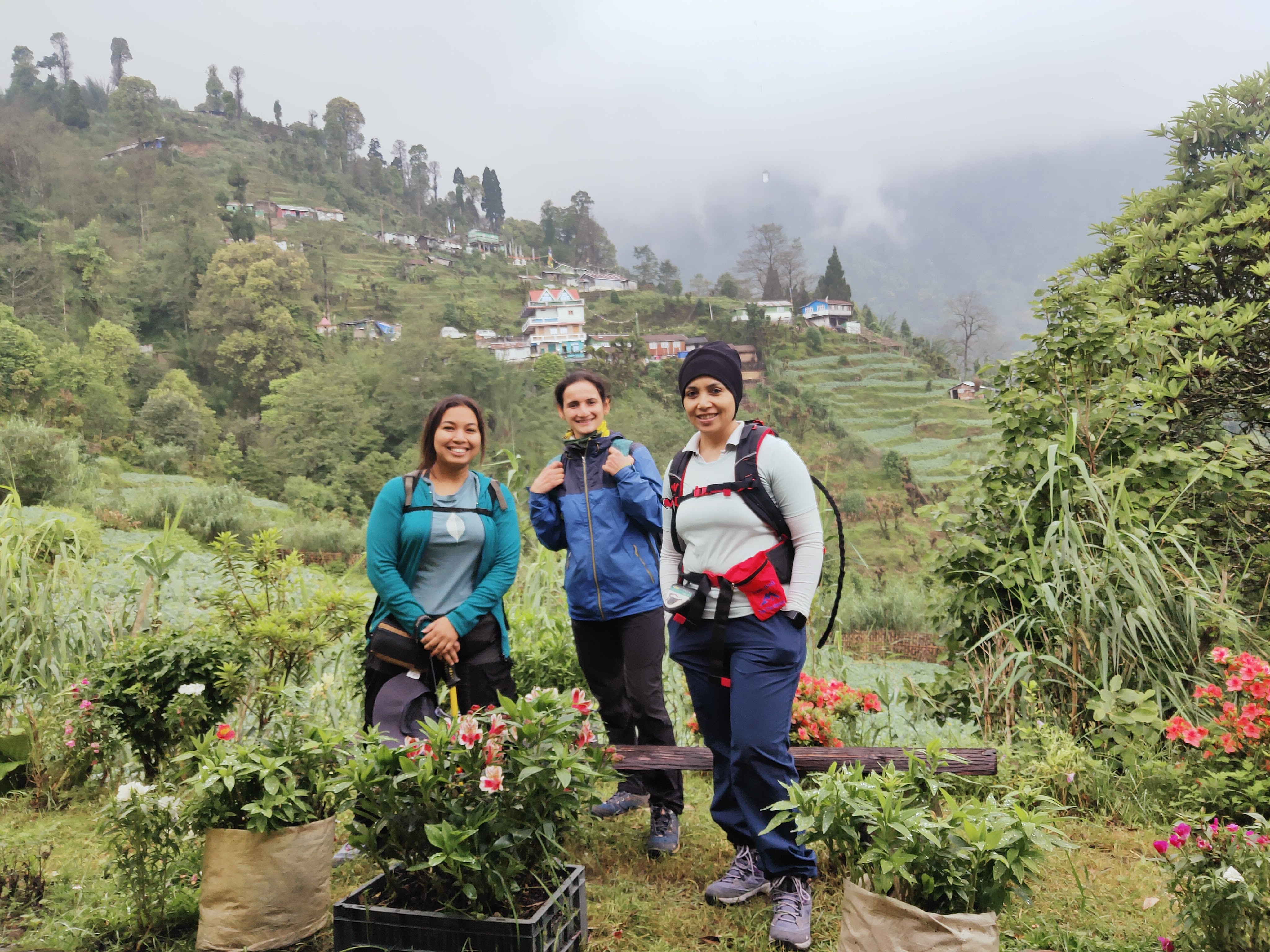
I’ve been on a Himalayan trek once before, six years ago, with a 10-member group, all of whom were strangers to me, but many of whom have become great friends of mine. This trek was no different, probably more intense because it was tougher and because we were a small group of just three, all women. The fact that each of us came from different backgrounds, belonged in different age-groups, and had different motivations for coming on the trek did not matter. Our shared experience of the trek, over just a 6-day period, has bonded us in a way that few routine interactions, even over a prolonged duration, could have done.
I saw this even more starkly among the locals. Everybody seemed to know each other. Everybody was considerate of the other’s needs. Everybody made time for another. Everybody stopped to say hello to the other no matter how pressing their own schedule. This was human connection for real, sans mobiles and the Internet.
In fact, none of us had mobile connectivity while on the entire trek. And we felt so much the better for it!
8. Borders can separate man from man, but not humans from humanity.
The trek route was interesting not only because it crisscrossed two states – West Bengal and Sikkim – but also because it switch-bordered two countries – India and Nepal! In fact, on three nights out of five, we slept in Nepal. But the interactions with the locals had a consistent quality throughout, one of healthy curiosity, warmth, and concern for our safety and comfort. We were not the high-paying tourists that would alleviate their financial need, so it was definitely a higher human motive that drove them to engage with us so transparently.
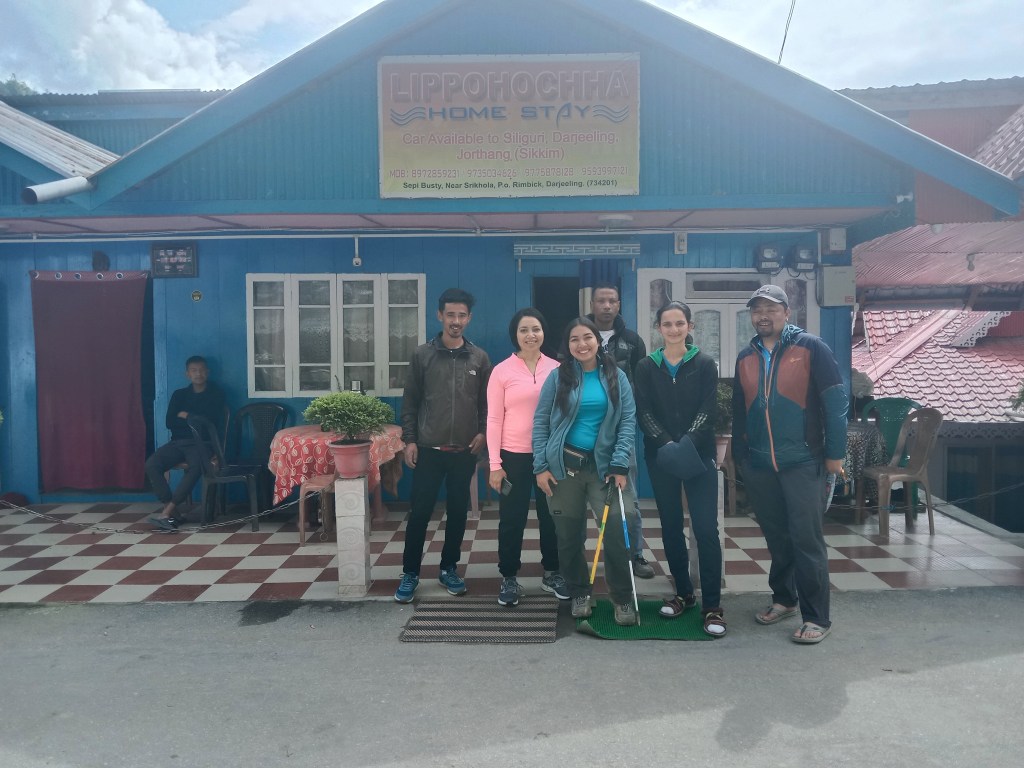
In the Himalayan reaches of West Bengal, most of the population is Nepali (gorkhas, sherpas, gurungs, tamangs, chhetris, etc.) and Tibetan. Despite being proud of their heritage and continuing to have family ties in their home countries, they have an endearing respect for their adopted country. In fact, the homestay that I put up in at Darjeeling after the trek was run by an enthusiastic Tibetan couple. They all continue to take the meaning of hospitality to a higher level.
9. Being in nature provides the best rejuvenation one could ask for.
My singular goal for this *trek-cation* was to be mindful. I wanted to be present in every moment of the experience. And, boy, did it serve the purpose!
Some things cannot have you be any other way – like on Day 5, climbing downhill from Sandakphu to Sirikhola, via Gurdum, along the forest trail in Singalila, braving the slopes made more slippery by the continual rain. Each step had to be planned uniquely for the right balance between angle of foot placement, depth of descent, frontloading or backloading based on where you can stake your trekking pole, the distance between you and the person in front of you, and what the next stepping ledge/ stone might be. You just had to focus on the task at hand.
But even otherwise, the mountains have a way of calling out to you. Come, see my many colours, soak in the clouds, gaze at the little things on the grounds far below. Come, let me take you higher!
At the end of each long day, we seemed to be reviving each of our senses, looking forward to the next day with more gumption.
10. Fun is a state of mind, not a factor of the money in one’s pocket or the access to fancy resources.
Even though we were a small party of three, without access to Wifi or even cell towers, the trek brought out each of our unique personalities, allowing us to get to know each other without reservation or judgment. We truly enjoyed each other’s company and had fun enjoying the simple things in life.
Of course, being on the same trek was the outcome of self-selection, so clearly, there must be a common thread that brought us to share the same time and space. But being limited in resources did not in any way diminish our ability to enjoy ourselves. And, we picked up several tips in this department from our trek guides too.
11. Nothing awakens the spirit like nature’s powerful forces.
Day 5 was what we all had been waiting for – the tryst with the Buddha, if He cared to show Himself from amidst the rain and cloud cover. We awoke at 4.30 am, much like the locals, and found, to our chagrin, rain pouring down in torrents. Pulled on the blankets and went back to sleep. But the Buddha would not let us go empty-handed.
At 7 am, just as we were readying to have breakfast, the drizzle stopped, and the clouds parted just enough to offer us a magnificent view – the entire Kanchenjunga range – The Sleeping Buddha!
I soon found my eyes brimming over. I don’t know exactly what it was but that sight etched a lasting memory in my mind. I was overcome with emotion – at the humility of my small existence, at the bountifulness of Nature, at the gratitude I felt for being able to witness this glorious sight.
I don’t know if I’ll ever get atop the mighty Kanchenjunga, but I do know that the Buddha stirred something inside me that day.
Note: ‘Kan’ means head, ‘chen’ means belly, and ‘junga’ means knee. If you can clearly view these three sections at the same time, you can see that the Buddha is sleeping. Hence, this range is also known as the Sleeping Buddha.
My eyes light up each time I visit a gym the same way a child’s do when she sees a toyshop. I love to check out the equipment, the freeweights, the pull-up bars, the benches, the power cages, and cables & pulleys, etc. It is almost therapeutic for me to see how different gyms are laid out and the type of exercises they cater for.
Because I know how addictive ‘gymming’ can be, I understand when I see some people training religiously in the weight room, to the exclusion of all other forms of exercise. The category of young men especially falls within this group (their favourite body parts being the arms and chest – to be trained everyday!) Yet, there is so much variety in terms of exercises that even watching a weight training session in progress can be entertaining.
In contrast, the cardio sections of gyms could seem monotonous and boring. The so-called ‘serious’ fitness freaks, especially among men, stay away from cardio exercises because they seem too ‘feminine’. It is no wonder that all classes for aerobics, Zumba, Bollybics, and other variations of the same thing, have an overwhelming proportion of females in attendance as compared to males. Just as women don’t want to ‘bulk up’ by training with weights, men do not want to appear feminine by doing cardio work.
I see some people training religiously in the weight room, to the exclusion of all other forms of exercise.
But ignoring cardio exercises simply means that you are overlooking a crucial component of fitness – your cardiorespiratory health – the health of your heart, which you will literally need for a lifetime to pump blood through your body; your blood vessels, which carry the nutrients your organs need for various functions; and your lungs, which oxygenate the blood from the air you breathe.
Let us understand why cardiorespiratory endurance matters. Put simply, it is the ability of your heart, blood vessels and lungs to function adequately for a prolonged period of time while carrying out any aerobic activity, i.e. when your body can use oxygen in the air to generate energy. You are in this aerobic zone over 99% of the time – while carrying out all day-to-day activities. The aerobic zone is heightened when doing cardio activities such as walking, jogging, running, cycling, swimming, rowing, stair-climbing, dancing, step aerobics, etc., which is why it counts as exercise, popularly known as ‘cardio’.
Cardio offers six key benefits for health and fitness:
Improved heart health – The word ‘cardio’ literally means ‘heart’. Cardio helps to regulate and enhance the capacity of the heart to pump blood through the body, thus, reducing your Resting Heart Rate (RHR), which is a measure of the fitness of a person’s heart. In practical terms, it means that the lower your RHR, the greater your stamina when it comes to cardio/ aerobic activities that last for a long duration, ranging from a few minutes to even a few hours. A healthy person’s RHR is typically between 60-80 beats per minute. A healthy person with a lower RHR than 60 bpm shows positive adaptation to cardio exercise and will likely have greater endurance or stamina than a person with a higher RHR.
Do you know people who get out of breath after walking just a few tens of metres or climbing a short flight of stairs? They likely have a high RHR, i.e. over 80 beats per minute
Lowered recovery time – A lowered RHR means that you can recover quickly from any strenuous activity and, thus, you would feel less tired than before. Also, the cardio training stimulus leads to a process called ‘neocapillarisation’, i.e. formation of new capillaries, through which nutrients are transported to different organs in the body via the blood. With a greater number of capillaries available for this job, recovery time is further reduced.
Reduced risk of heart disease – With an improvement in heart health, the risk of disease automatically goes down, as it normalises blood pressure, helps to manage insulin response to glucose (the key marker for ‘diabetes mellitus’), and, hence, reduces risk of atherosclerosis.
Improved skin health – Cardio increases the circulation of blood through the body. The nutrients in the blood reach skin cells too and drive toxins & dirt out of the body through sweat. This helps to keep your skin healthy.
Accelerated fat loss – Aerobic exercise of any kind draws upon your body’s fat reserves for providing energy for long periods. Hence, cardio can help accelerate fat loss and improve body composition.
Reduced stress – While exercise of any kind helps alleviate stress, cardio work especially releases endorphins into your blood that activate your mood sensors and reduce stress by increasing the blood circulation to your brain.
With a wide-ranging menu of cardio activities on offer, one may wonder which one to invest time and effort in. More on that soon.
I saw the inside of a gymnasium for the first time when I was 14. My school was rather avant garde when it came to sporting facilities and the brand new gym was the latest addition to its repertoire for physical training. A friend and I were so enthused by the various types of equipment, that we would sneak into the gym after the Games session every evening to crank out some reps on the leg press machine or pec dec station (I didn’t know what the equipment were called until many years later).
One day the Sports Teacher saw us doing some lifting and hastened to warn us. I believe he said something to this effect, “That machine is not meant for you. Girls should not use it or they’ll grow disproportionately.” Alas, the teacher was not avant garde enough. So that was the end of my gym exploration. And it remained that way until a scientifically better informed trainer cleared the cobwebs in my head about why ‘girls’ should, in fact, train with weights.
“That machine is not meant for you.”
Today, despite the updated awareness among the trainer community about the benefits of resistance training for women, the lack of awareness among women themselves remains high. Have you seen how the cardio sections of most gyms are packed with women sweating it out on the treadmills or elliptical trainers while the weight rooms are almost devoid of women?
My own perception of weight training changed only when, about a decade ago, an enthusiastic trainer encouraged me to complement my marathon training with some strength training. I did not fully comprehend why he thought it was important for improving my running but I agreed to give it a shot anyway. And that became the turning point in my fitness journey.
It is close to impossible for women to look like men because they are governed by different hormones.
Let’s first look at why women are resistant to resistance training (oops, I did it again!) Most women who shy away from weight training think they’ll end up looking grossly muscular, too manly for comfort. In truth, it is close to impossible for women to look like men because they are governed by different hormones. The predominant male hormone, testosterone, which makes men looks like men, is what promotes muscle build-up. Women have very low levels of testosterone and could only look like men if they underwent hormonal intervention (read steroids). The female hormone, estrogen, on the other hand, helps fat build-up, among other things. That is also the reason that women have a relatively higher percentage of body fat than men. So that should put to rest any doubts a woman has about looking manly or unfeminine.
But are there any special benefits for women to engage in resistance training apart from those available to men such as fat loss, muscle definition, and increased strength and functionality? Several!
Because weight training enables hypertrophy, i.e. growth, of muscles, it accentuates the natural human form. In the case of women, the improved muscle tone helps to show curves where they matter – shoulders, arms, buttocks, thighs, and calves. Training the muscles of the back and core helps to taper the waist, giving the illusion of the hourglass to the entire female form. As a woman, wouldn’t that be something to strive for?
Women tend to be more prone to bone-related troubles than men due to the effects of childbirth and age-related degeneration following menopause. Osteoporosis and osteopenia, thus, affect women a lot more frequently than men. Resistance training, supported by adequate nutrition, is the only form of exercise that can help to strengthen the joints and bones, thus, reducing the risk of these maladies. For the cardio-lovers, weight training complements high-impact cardio activities by improving bone density and preparing the joints for sustaining high-impact work.
The improved muscle tone helps to show curves where they matter – shoulders, arms, buttocks, thighs, and calves.
For women of childbearing age, weight training can prove to be highly beneficial in all phases of making a baby – during pregnancy, delivery and post-natal recovery (this has been my own experience too). Women who lift weights on a regular basis have fewer pregnancy symptoms and are able to deal with them better than those who don’t – little or no water retention, swollen ankles, backache, nausea. They have a higher chance of delivering a baby naturally, i.e. through a normal vaginal delivery, versus women do not train with weights. They are also much better placed when it comes to post natal recovery, easily regaining their pre-pregnancy weight, and resuming their exercise form. The training also naturally helps with all the lifting that a new mum has to do – a baby, nappies, wipes, bottles, bags, mats, toys and what have you!
So, woman, the next time somebody tries to tell you that you shouldn’t train with weights, do yourself a favour and find a different fitness advisor!
I became a yogini over two decades ago, quite by accident. A college-mate of mine had enrolled for a class on her parents’ recommendation. She suggested I check it out. It was the first time I had tried any activity like it. I discovered not only that I enjoyed the experience but also that I was rather good at it.
Once a month, the 60-something Yoga teacher would invite other Yoga teachers from his matth, which practised the Iyengar style, to break up the monotony. On one such occasion, the invitee teacher led us through a particularly complex routine of yogasanas. As the complexity grew with each pose, more and more participants started to stall. To my surprise, I was among a handful that could complete all the poses as directed. The teacher beamed at me as I arched my back in a perfect Kapotasana, the pigeon pose, and said encouragingly, “Now, strive to maintain this flexibility throughout your life.” So that is what I did.
I am grateful for the day that my friend convinced me to go to that class with her. Yoga has been a constant companion in my life ever since. (My love for it eventually translated into a certification as a Yoga teacher following the Ashtanga philosophy a few years ago.) My belief in Yoga as a way of life has only solidified further.
Around me, I’ve noticed that the attendees in Yoga classes typically span a gradient from middle-aged women (especially homemakers), senior citizens (primarily interested in Pranayama), or exercise-starved corporate employees in a corporate-sponsored class, on one end of the spectrum, to young adrenaline-seeking enthusiasts of Power Yoga and passionate believers of the Yogic philosophy on the other. However, I see people attending Yoga classes to the exclusion of any other form of exercise. And that’s where the disconnect occurs.
Yoga, undoubtedly, has holistic benefits for not just health but also life in general. I would be amongst the first persons to attest to its importance in health and fitness. Among the benefits from Yoga are improved flexibility, which reduces risk of injury; improved breathing, which enhances cardiovascular health and stamina; improved posture and balance, which improve spine and bone health; and relaxation and stress-relief. A highly advanced practice can even improve muscle tone and strength.
I would venture as far as to say that among all types of exercise, the practice of Yogasanas is perhaps the only form to enable improvement on all five components of fitness. And, yet, it has limitations when it comes to progressive overload, a key requirement for developing musculoskeletal strength, the main antidote to aging, which I discussed in detail in my last post.
‘Progressive overload’ simply means giving your body a greater training stimulus once it gets accustomed to a particular level of training. For example, the veteran jogger who runs the same 5 kilometres every day is not progressing in his cardio training while the newbie who adds five more minutes to his ten-minute jog, or adds half a kilometre to his 2-kilometre run, or takes two minutes less to run the same 2 kilometres, is increasing the load and intensity.
Similarly, while training with weights, one might add a few repetitions to a set, or a whole set to an exercise, or increase the weight for a set, or do the same number of sets in less time than before, as a way to increase the load. The idea is to go beyond your comfort zone and push your body to do a little more once a particular training level is reached. For example, a novice to weight training might be able to do 15 reps of an exercise in her first week before experiencing fatigue. Once she finds that she can go up to 20 reps without fatigue, she could increase the weight or resistance to deliver 12 reps. As her muscles gain strength to perform 15-18 reps of the same exercise at the new weight, she can move to a higher weight again.
While doing yogasanas, there is sufficient progression until you learn the correct posture, balance, form, technique, and how to handle your own bodyweight. You might even gain some load by increasing the duration of your practice or adding variations of an exercise to target the same muscle group multiple times. However, it is impossible to add further resistance to such practice once bodyweight training comes within your comfort zone. For example, a person who can perform an Adhomukh Vrikshasana, a handstand, even when adding pushups to the handstand, will need to resort to external weights eventually to seek hypertrophy and further strengthen her shoulders, arms and forearms.
Weight training provides your body with the training stimulus to first break down muscle tissue and then build it up larger to be stronger than before. If fat loss is your goal, then the greater muscle mass means that you carry more metabolically active tissue, which revs your metabolism and increases your Basal Metabolic Rate (BMR). Also, resistance training has the greatest after-burn effect among all types of exercise. Hence, you burn more calories even when you are at rest and not only during exercise.
So the next time you face a dilemma as to whether to sign up for resistance training despite the daily Yoga class or not, don’t choose. Go for it!
I was 11 when I learnt for the first time that ‘walking’ was a cure for all obesity-related maladies. A neighbour, the mother of a friend of mine, had, I’d heard, been denied a reservation on a US-bound flight by an airline because she was overweight. Now I don’t know about airline norms existing at the time, but I do recall that that lady walked about ten kilometres everyday for the next three months to whittle down her 96-kilo frame to a 78-kilo one. When she tried to book her ticket again, the airline had no cause for complaint. On my following term break, I heard that the lady had had to extend her sojourn in the US due to a knee fracture she suffered from a fall on the pavement.
I’ve seen this story repeat itself several times since then (newly minted middle-aged marathoners who literally break a leg, come to mind). ‘Walking is the best exercise.’ This apocryphal piece of advice is dished out to so many so often without the slightest thought for long-term health.
Well-meaning relatives and friends, who oftentimes are the biggest defaulters where exercise is concerned, seem to proffer this advice left, right and centre. Mothers-in-law of expectant brides encourage their daughters-in-law to ‘simply walk’, all as part of the ante-natal care-giving for the mothers-to-be. Doctors of obese diabetic patients prescribe ‘walking for 20-30 minutes a day’ as part of the treatment. Parents of obese teenagers tag the children along with them on their own morning walk ritual.
‘Walking is the best exercise.’ This apocryphal piece of advice is dished out to so many so often without the slightest thought for long-term health.
Now, I have nothing against walking as a form of exercise. In fact, it is an inseparable part of my own regimen. It is convenient, cheap, does not need to be learnt, and does not require any special gear or equipment except a good pair of shoes. But to say that it is the ‘best form of exercise’ only explains the ignorance of the person saying it.
A person may be motivated to take up exercise for a variety of reasons, mostly reactively, unfortunately, rather than proactively. But if the goal is to seek long-term sustainable health and fitness, then depending on walking alone is investing your time in a severely lop-sided exercise programme.
If you break down the physiology of walking, you’ll realise that it is primarily a lower body workout, which engages your core. It is a high-impact activity that causes a great amount of stress on your weight-bearing joints, the hips, knees and ankles. Since it is a low intensity steady state activity (walking fast would still qualify as low intensity if you are able to do it for tens of minutes), walking engages your aerobic energy system (more on this later), necessarily involving your cardio-respiratory apparatus to provide a constant supply of energy.
The reason that long-time joggers look very lean – they lose the defining muscle along with the body fat.
As a cardio activity, then, walking depends on the carbs immediately available in your system in the form of glycogen stored in muscles, the fat stored in your body as adipose tissue, and the protein from muscles, which can break down to create glucose for energy, in that order. This implies that a cardio activity will eat through your muscle (presumably precious) if it is not able to generate enough energy quickly from the body fat (presumably dispensable). That’s also the reason that long-time joggers look very lean – they lose the defining muscle along with the body fat, unless their nutrition super-compensates for it.
When you let go of muscle, you allow for the weakening of your joints and, hence, bones. So, while your cardio-respiratory endurance improves, resulting in greater lung capacity and a lower resting heart rate, your muscles atrophy and your joints become feebler. How do you then spare the muscle and avoid risking a joint/ bone injury? By doing two things – ensuring appropriate nutrition (a protein-rich diet to repair the muscle tissue) and training with weights.
If fat loss is your goal, then you absolutely must make weight training a part of your fitness regimen.
Weight training provides your body with the training stimulus to first break down muscle tissue and then build it up to be stronger than before. It also prepares your joints and bones for dealing with high-impact activities such as walking or jogging.
If fat loss is your goal, then you absolutely must make weight training a part of your fitness regimen. A larger muscle mass means that you carry more metabolically active tissue, i.e. lean body mass, which revs your metabolism and increases your Basal Metabolic Rate (BMR). Also, resistance training has the greatest after-burn effect among all types of exercise. Hence, you burn more calories even when you are at rest and not only during exercise, as is the case with a cardio activity.
Here’s a bonus: weight training helps muscles to hypertrophy, i.e. grow larger, giving your body a complementary anti-aging lucky charm. It tones the body because muscles add definition to the limbs. You’ll love the compliments that come your way. (See what I did there?!)
Despite all these benefits to resistance training, there is a lot of resistance to training this way. (Okay, now I’m overdoing it…backing off!) I’ll explore other myths on this soon.
A very close relative, a contemporary of mine, let’s call her P, was a skinny child and a slender teenager. I envied how she never had to care whether any of those cute prom outfits would look nice on her or not. She was decidedly a mesomorph. Her lifestyle allowed enough room for culinary indulgences without causing a large change (pun intended) in how she looked. While I was always goaded by my parents to exercise, she was hardly ever at the receiving end of such parental concern. Luck favoured her well into her twenties. Then, it ran out.
She was decidedly a mesomorph.
A dramatic change in her lifestyle and diet, when she relocated to another city, first started to show up on the scale – she gained over 10 kilos in a single year. A demanding and erratic work schedule aggravated the issue, bestowing digestion problems in parallel. The stress soon began showing on her face in the form of unsightly eruptions. When she got married a few years later, it was as if P had left all cares for her health behind. Five years and a child later, P weighed a full 30 kilos more than she did when she was 22, with her body fat percentage having doubled from 20% to over 40%. She also had severely weakened knees and the beginnings of hypertension.
Luck favoured her well into her twenties. Then, it ran out.
P’s story is not out of the ordinary – this is an eventuality that most women, especially in India, take for granted. Childbirth and raising children are, in fact, considered a licence for letting oneself go and not have to answer for one’s health. The same goes for many men who seem to expand at alarming rates after marriage, all their indulgence justified in the name of love and appreciation for their wives’ cooking. Really? Whom do they think they are kidding? What about the accompanying diabetes, hypertension, osteoporosis, you-name-it-lifestyle-disease?
I believe this complacency begins early in life, when age, hormones, and the relative lack of responsibilities are all on our side. As children or teenagers, nobody holds it against us if we look a little heavier than average. At that age, the body is so forgiving and supportive that even the most half-hearted exercise regimen can right a lot of dietary wrongs, thanks to a relatively faster metabolism. That’s also when one starts to believe that exercise is not required if one is not fat.
Childbirth and raising children are, in fact, considered a licence by women for letting themselves go and not have to answer for their health.
However, fitness is much more than just about carrying excess body fat. It involves four other critical components too:
Cardio-respiratory endurance – the ability of your heart, blood vessels and lungs to function adequately for a prolonged period of time while carrying out any aerobic activity (recall how some friends of yours quickly get out of breath with the slightest cardio activity?)
Muscular endurance – the ability of your muscles to adequately support your cardio-respiratory system for a prolonged period of time while carrying out any aerobic activity (remember the time you had to cut short your dance class because of the catch in your thighs and shins?)
Musculo-skeletal strength – the ability of your bones, tendons, ligaments and muscles to exert maximum force against any form of resistance (the time when you had to move a heavy log of wood out of the driveway comes to mind?)
Flexibility – the ability of the body to achieve maximum range of motion around joints (recall the moment when you not only managed to touch your toes but also wrap your fingers around the soles of your feet when your Yoga teacher led you through the Pashchimottanasana, the seated forward bend?)
Fitness is much more than just about carrying excess body fat.
Now, two important things to remember where exercise is concerned:
No single type of exercise can lead to improvements in all four components of fitness. Hence, depending solely on the ‘30-minute walk everyday’ or ‘Yoga three times a week’ or even ‘Crossfit five times a week’ cannot help you improve on all four counts simultaneously.
Having said that, however, any form of exercise is better than no exercise at all, since it will positively affect at least one component of your fitness.
So, which exercise should you do and why? I’ll get to that in a bit.
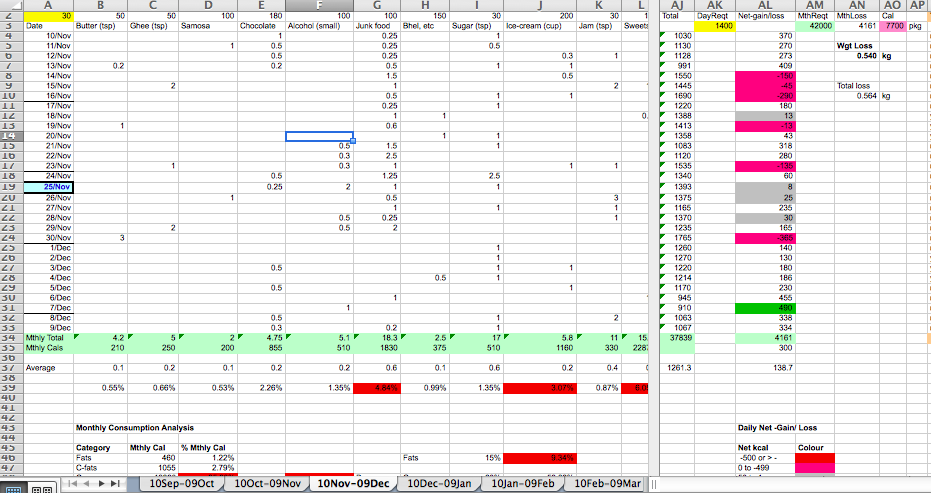
I caught on to the calorie counting game long before the advent and proliferation of fancy calorie tracking apps. As far back as 2008, I figured I could use my skills at Microsoft Excel to do more than creating financial models and business plans. I created my own calorie counter, following up with several updated versions (I think I even passed it on to some keen friends and relatives). The idea was to have a neat food log to track the calorie intake on a daily basis and ensure it remained at or near my Basal Metabolic Rate (BMR). I arrived at my ideal calorie requirement based on conventional wisdom of the time, and the vision I had of myself six months down the line.
That’s it, I thought. Calorie counting and control is all I need to do to crack the weight loss game.
As my food log got populated, I could see patterns emerging. I utilised the knowledge to tweak my dietary habits. Barring a few social incidents, I managed to remain fairly consistent in sticking to my ever more aggressive calorie goals. Needless to say, at the end of three months, the number on the scale had moved south significantly, despite little support in the form of exercise. I was feeling rather proud of the achievement not only because of the weight loss but also because of this fantastic tool I’d developed. That’s it, I thought. Calorie counting and control is all I need to do to crack the weight loss game.
Not so fast! Despite the shouts of success from the weighing scale, I wasn’t receiving the expected looks, compliments or appreciation from people around me. Why couldn’t they see what I could?
Have you ever had this experience? Or know someone who did? Why was your/ their ‘loss’ not apparent or as significant as what the scale suggested?
The answer, as I discussed in my last post, lies in the type of weight that was lost – water, muscle or fat. Weight loss is easily apparent to the eye of a beholder when there is fat loss. Hence, what an overweight person with a disproportionate body composition must seek is fat loss, not simply weight loss.
Coming back to the original question, eating less does indeed help you lose weight. But, and this is a BIG ‘but’, it will not necessarily help you lose fat if you are eating the wrong type of calories since all calories are not equal.
Weight loss is easily apparent to the eye of a beholder when there is fat loss.
Another phenomenon that you might notice is that the rate of weight loss tends to slow down despite maintaining a calorie deficit, i.e. eating fewer calories than one spends in a day. This is because the BMR of a lighter person is lower, in absolute terms, than that of a heavier person (not to be confused with slow or fast metabolism).
Also, remaining on a calorie-lowering spree could prove dangerous if you reach calorie intake levels so low that they threaten the normal functioning of the body, usually around 1,000 calories, for the average adult.
A collateral fallout of such low calorie intake levels is that the body senses that it is in a semi-starvation mode and holds on to its stores of energy even more closely, potentially stagnating or even reversing weight loss.
So, take the ‘eat less’ formula of weight loss, or rather, fat loss, with a pinch of salt. There are other ways to create a calorie deficit than simply through eating less.
It was one of those New Year’s eves when you decide you’ve had enough and need to take charge of your life. This particular one was memorable because I actually managed to stick to my health-related resolutions for over five months in the new year. I’d celebrated my first wedding anniversary and the ‘new bride’ glow had started to wane. The weighing scale seemed to have taken on a life of its own, adding numbers at will. Within just a year, I had gained almost 10 lb, firmly putting me in the ‘overweight’ category. I knew I had to do something. Leveraging my past experience, I turned to what I knew had worked in the past – exercise.
I had gained almost 10 lb, firmly putting me in the ‘overweight’ category. I knew I had to do something.
I had always been involved in sports while at school, thanks to a carefully crafted regimen at my quasi-military style alma mater (something I can’t be thankful for enough). While at college, I’d got introduced to Yoga and fallen in love with it. The one thing I wasn’t too proud of was my endurance level. I decided to kill two birds with one stone – improve my stamina, and lose the excess weight. The first hour of my day was, thus, reserved for jogging (as far as I could go without stopping) followed by a routine of intense Yogasanas.
The first moment of exhilaration came when I crossed the 5-km mark for the first time, about eight weeks into my schedule. I was ecstatic to find that I did have some endurance muscle fibres in me after all. The Yoga practice was supporting the cardio schedule admirably, with outstanding improvement in breathing capacity and flexibility. I did not own a scale then so was not distracted by minor fluctuations. The diet was unchanged but the eating was mindful. In about three months, I’d reversed all the damage of ‘newly-wed’ celebratory feasting and then some.
“Are you not keeping well?”
I was feeling highly accomplished. That’s when the reality check happened. One day, a colleague that I was collaborating with again after several months of being on separate projects, casually asked, “Are you not keeping well?” …er…what?
Have you ever had a friend or relative return from a health retreat, where they promise dramatic weight loss, put you on a detox diet of ‘healthy’ juices, boiled and tasteless vegetables, and lentils cooked the ‘zero-oil’ way? You wondered why he looked so feeble that he might fall if he stood in the way of a mildly strong draft of wind? Or a cousin or aunt who took up marathon training to ‘lose the flab’, but at the end of the annual marathon calendar ended up not only weighing several kilos less but also looking several years older, with sunken eyes, gaunt cheeks, and far more wrinkles than you remembered she possessed?
Without going into a lesson on physics, let us understand what ‘weight’ actually means in the context of health and fitness. Our bodyweight comprises two things: lean body mass and body fat. Lean body mass further comprises internal organs, bones, muscles, skin, and body water. Of these, muscle tissue is the most metabolically active tissue, requiring more energy than the other components for growth, repair and maintenance. In terms of changes in weight, it is the muscle mass that can gain or lose weight in the short term, a few weeks or months. The only other component that can change in weight quickly is the water in the body; just a few days are enough.
The prolonged cardio activity definitely burnt the fat, but only after it ate into precious muscle too, hence, the weathered look.
In the case of the friend who patronised the health resort, what he probably lost was water weight. In all probability, he promptly regained all the lost weight within a few weeks of his return as his body readjusted to the usual levels of water intake and retention. In the case of the marathoning cousin, she lost valuable muscle tissue along with the dispensable body fat. The prolonged cardio activity definitely burnt the fat, but only after it ate into precious muscle too, hence, the weathered look.
Appropriate levels of fat loss, while retaining existing skeletal muscle mass, will automatically give you the lean look.
The ideal body composition focuses on body fat as a percentage of your bodyweight. Hence, one should aim to lose fat rather than simply losing weight. Appropriate levels of fat loss, while retaining existing skeletal muscle mass, will automatically give you the lean look.
Now, here come the twin dilemmas:
If a so-called ‘healthy’ diet only helps to lose water weight then what should I eat to lose fat?
If a challenging physical activity like marathon training costs me precious skeletal muscle mass, then how do I protect it? (Everyone says walking is the best exercise. I thought I’d take it to the next level with running. Should I simply walk then?)























 What the Health